

Welcome to Week 2 of the Zero-to-Visible in AI 90-Day Experiment! (And most importantly, happy holidays!) If you are new here, this is a live experiment testing what it actually takes for a new brand to show up inside AI answers (ChatGPT, Perplexity, Gemini, and more).
We’re sending this newsletter a day early because no one needs emails on Christmas. But here’s the important part: AI doesn’t take time off.
While our team steps away, AI systems continue answering questions, forming opinions, and recommending vendors. That’s why the next phase of our live experiment mattered so much. Week 2 was about setting up the technical and structural signals that allow AI to work for our brand, even while on break.
So here’s what that entailed:
Launching with Channel Consistency
When we launched No Fluff (12/11), we didn’t just publish a website. We went live across LinkedIn, YouTube, Instagram, Facebook, X, and more; not to post everywhere forever, but because AI doesn’t rely on a single source to understand who you are.
AI systems cross-check information across the web. When they see the same company description, positioning language, category, and leadership details repeated consistently, they gain confidence. That consistency includes clear “same as” relationships across platforms.
Website and Technical Setup
This phase isn’t about design. It’s about how machines read and understand your website. We focused on a clean, fully crawlable web structure with clear schema, cohesive internal linking, and supporting files like LLMs.txt so AI systems can unambiguously understand who we are, what we do, and who leads the company. If AI can’t clearly parse your site, it can’t confidently reference it, no matter how good the copy is.
Here are some technical lessons we learned quickly, which you can check for yourself:
- Over-complicated page layouts confuse AI: Too many sections, containers, tabs, or accordions fragment content. Simple page structure helps AI understand the main message.
- Website instructions must match your website words: Behind-the-scenes files (like schema and LLMs.txt) tell AI what your site is about. If those say one thing and your actual pages say another, AI hesitates.
- One system to manage structured data (what AI reads): We put all structured settings (schema, metadata, and AI-facing files) in one tool, Rank Math. Ensure themes or plugins don’t quietly override things (we found and fixed this!)
- Site speed is non-negotiable: Slow sites get skipped. Large images and videos slow crawl and render speeds, so we reduced their file sizes to improve readability. We shrank file size, but still have work to go in this category!
- Make sure AI can actually access your site: A webpage existing doesn’t mean AI can access it. We checked robots.txt, sitemaps, and Hostinger security settings and removed blockers.
Built a Credible Prompt Set
Last week, we shared that AI platforms do not expose real user prompts (questions), so understanding your visibility requires prompt engineering; building a fixed, intentional prompt universe before measuring anything. Ours includes ~150 prompts across six clusters that reflect how real buyers research vendors inside AI systems.
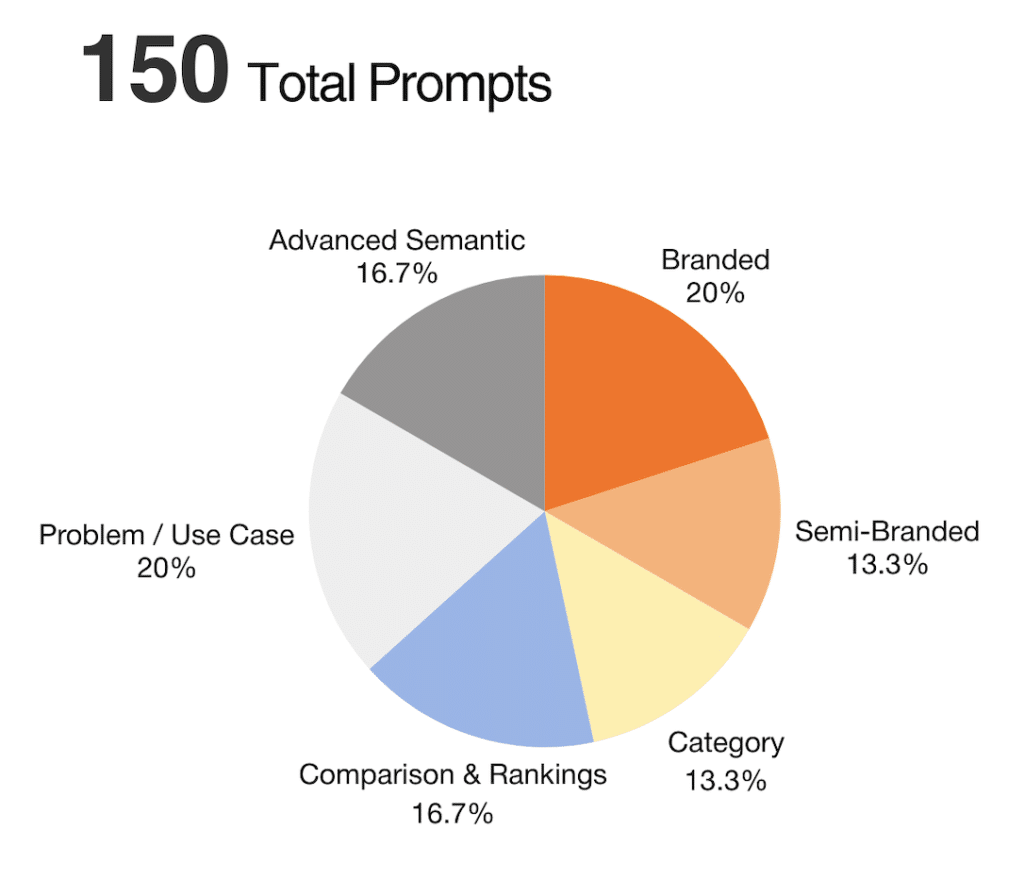
Here’s how the clusters work:
Cluster 1: Brand Recognition
Tests whether AI recognizes No Fluff by name and accurately describes what we do.
Example: “What is No Fluff?”
Clusters 2–3: Category Discovery
Measures whether AI recommends us when buyers ask category-level questions without naming us.
Example: “Who helps B2B companies show up in AI search?”
Clusters 4–5: Decision & Comparison
Shows how AI positions us in problem-based and comparison queries.
Example: “Best AI visibility agencies” or “No Fluff vs traditional SEO firms.”
Cluster 6: Deep Authority
Tests whether AI understands our approach beyond surface mentions.
Example: “How does Generative Engine Optimization actually work?”
And that’s Week 2!
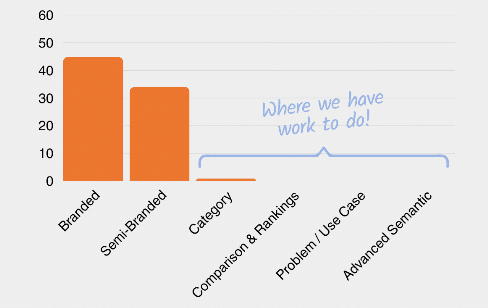
Next week, we’ll share our first post-launch visibility analysis; where we showed up, where we didn’t, and the insights that told us exactly what to do next.
Catch up on all our insights
Stat of the Week
Gemini’s answers overlap with Google’s top-10 organic search results only 12% of the time, compared to 62% for ChatGPT.
This single stat reveals how Google has separated Gemini from their own traditional search system and why AI visibility now follows a different rulebook. Read the full breakdown.
Fresh Reads
Each newsletter, we’ll share our favorite articles and breaking news.
- Semrush Launches Official App in ChatGPT, Offering Users Direct Access to Semrush Data (Semrush)
- AI Overview fan-out rankings boost citation odds by 161% (Search Engine Land)
- How Will AI Mode Impact Local SEO? (Search Engine Journal)
As always, reach out anytime at katie@nofluffmktg.com if you’ve got questions or if you’re building your own visibility story too.
Frequently Asked Questions About Zero-to-Visible and No Fluff
What is the Zero-to-Visible experiment?
Zero-to-Visible is an ongoing experiment that documents how a new brand becomes discoverable, explainable, and citable by AI systems. It tracks which signals influence whether AI systems recognize and recommend a company during early buyer discovery.
What does “AI visibility” mean in Zero-to-Visible?
In Zero-to-Visible, AI visibility means whether AI systems can recognize a brand, accurately explain what it does, and include it in AI-generated answers when buyers ask category-level questions.
Who is running the Zero-to-Visible experiment?
The Zero-to-Visible experiment is run by No Fluff, a B2B growth firm focused on how AI systems recognize, explain, and recommend brands in AI-generated answers.
Why is No Fluff running this experiment publicly?
No Fluff runs Zero-to-Visible publicly to document real-world signals that influence AI visibility. The goal is to replace speculation about AI search with observable patterns and repeatable methods.
Are the results specific to one AI platform?
No. Zero-to-Visible observes patterns across multiple AI systems, including retrieval-based and generative models. While individual outputs vary, consistent signals tend to produce similar visibility outcomes across platforms.
Can other B2B brands replicate these results?
Yes. When the same structural signals—clear brand definitions, consistent category positioning, structured content, and third-party validation—are applied consistently, similar AI visibility patterns can be reproduced.
Does Zero-to-Visible replace SEO?
No. Zero-to-Visible shows how AI visibility builds on SEO foundations. SEO enables access to content, while Zero-to-Visible focuses on whether AI systems trust, explain, and recommend a brand once that access exists.


